
Design Freedom
Design Freedom with Composite Materials
More freedom, fewer constraints
Composite materials remove many of the traditional limitations of product design. By using composites, designers can achieve optimal strength-to-weight ratios, high surface quality and integrated fastening solutions — without the need for expensive or restrictive manufacturing tools.
Composites also enable the design and production of larger, more integrated component assemblies. This reduces part count, simplifies manufacturing lines and supports more efficient serial production.
Limitations of traditional materials
Steel
Steel’s high density makes structures significantly heavier than those made from composite materials. In weight-critical applications, this often forces designers to reduce material thickness, which can compromise structural integrity and durability.
Steel is also prone to corrosion, requires protective treatments and offers limited flexibility for complex geometries. In addition, its relatively high thermal expansion can create challenges in applications with fluctuating temperatures.
Aluminium
Although aluminium is lighter than steel, this advantage comes with trade-offs in stiffness and strength. Material costs can be a significant factor in large-scale manufacturing, and machining can be challenging due to rapid work hardening.
Certain aluminium alloys may also become brittle at low temperatures, limiting their suitability for demanding environments. Galvanic corrosion is another concern when aluminium is combined with other metals.
Overcoming design barriers with composites
Composites combine two or more materials to create structures with superior performance characteristics. They offer exceptional strength-to-weight ratios, making them ideal for applications where weight reduction is critical without compromising strength or safety.
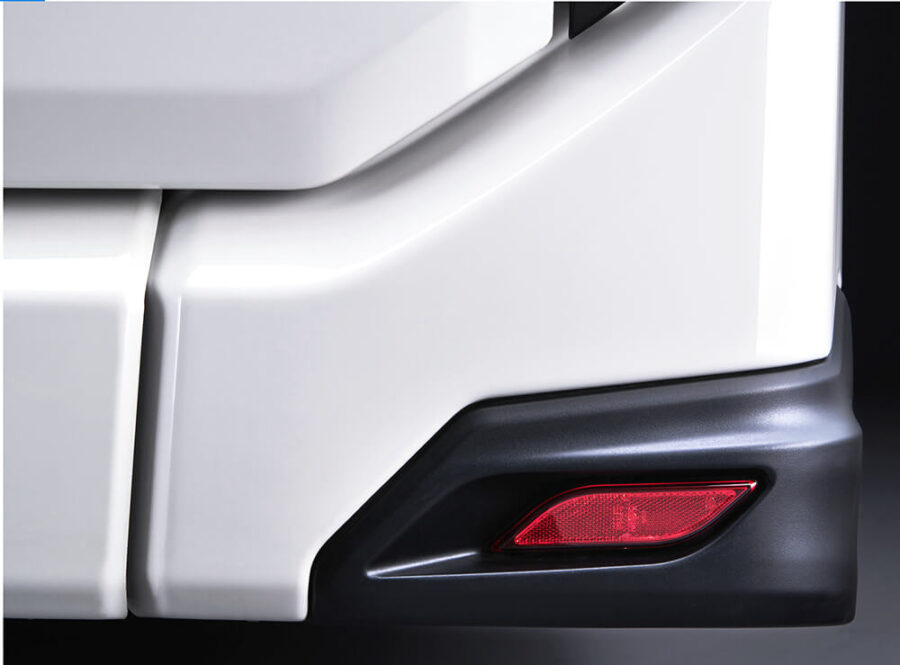
Composite manufacturing processes allow complex shapes and integrated functions to be produced efficiently. This design freedom enables innovative solutions that would be difficult or impossible to achieve with traditional materials.
In addition, composites are inherently corrosion-resistant, eliminating the need for protective coatings and making them well suited for harsh operating environments.
Tailored properties for demanding applications
One of the key advantages of composites is the ability to tailor material properties to specific requirements. By adjusting fibre type, orientation and volume, designers can optimise stiffness, impact resistance, thermal stability and durability.
Many composite materials also exhibit lower thermal expansion than metals, providing excellent dimensional stability in applications exposed to temperature variation or requiring high precision.
Design freedom delivers the greatest value when composite expertise is involved early.
Let’s explore how composites can remove design limitations in your application.